



sales@fwpcb.com
+852 21386086
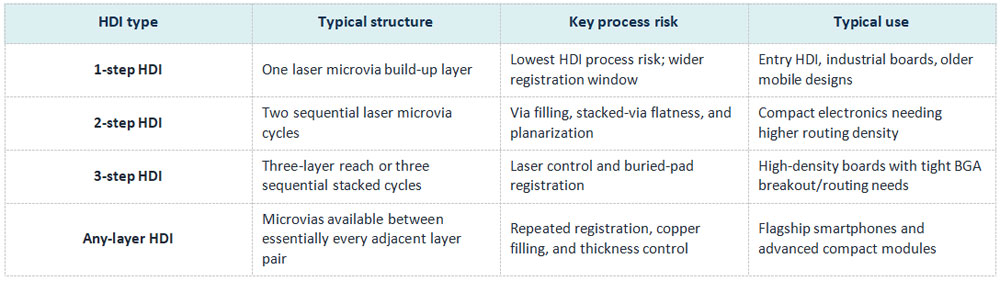
Quick comparison
Terminology used
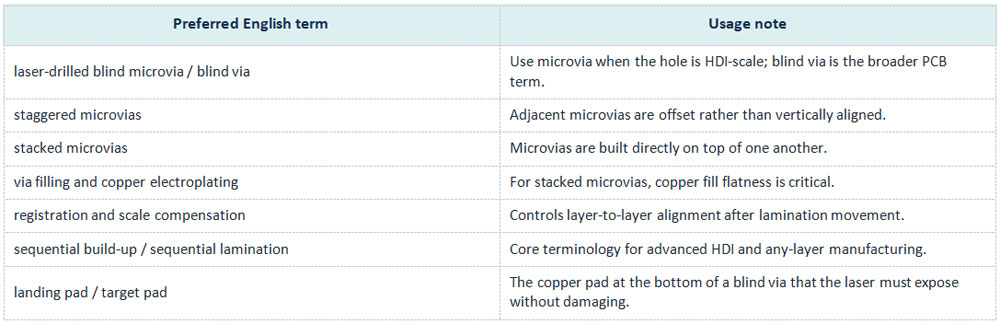
In PCB manufacturing discussions, first-order, second-order, and third-order HDI are practical shorthand for the number of sequential laser microvia build-up steps. In English, it is often clearer to describe them as 1-step, 2-step, or 3-step HDI build-ups, while still keeping the first-order/second-order wording where it helps connect back to the original source.
1. First-order HDI: the basic 1-step build-up
First-order HDI is the entry point for laser microvia manufacturing. It normally means one laser-drilled blind microvia layer from the outer copper layer down to the adjacent inner-layer pad.
Manufacturing flow
After the core or main multilayer stack is laminated, the fabricator uses laser drilling to open the surface copper and the first dielectric layer. The laser stops on the target pad of the next inner layer rather than cutting through it. The microvia is then metallized, copper filled, and plated. Because the process is essentially one laser-drill and one via-filling cycle, its registration and planarization requirements are relatively forgiving.
Typical applications
This type of HDI board is often used in older low-end mobile phones, industrial control boards, and other products that need a moderate density increase without taking on the cost and yield risk of more advanced build-ups.
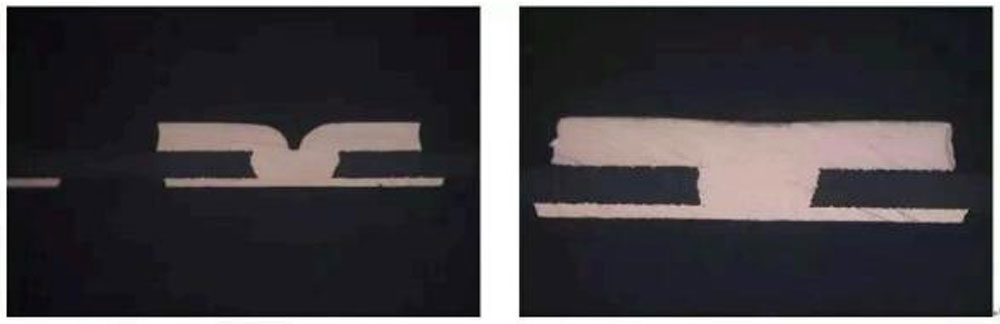
Typical one-layer laser blind via cross-sections.
2. Second-order HDI: two sequential laser cycles
Second-order HDI adds another build-up step. For an L1-to-L3 connection, the fabricator usually does not rely on one aggressive laser shot through two dielectric layers; instead, the structure is built with two sequential microvia operations.
Staggered microvias
In a staggered structure, the L2-to-L3 microvia is drilled and plated first. After the next lamination, the L1-to-L2 microvia is drilled beside it, so the two vias are offset rather than stacked on the same vertical axis. This approach generally has better yield, but it consumes more routing area because the vias need space to be staggered.
Stacked microvias
In a stacked structure, the L2-to-L3 microvia is drilled, copper filled, plated, and planarized first. The L1-to-L2 microvia is then drilled directly above it. This saves routing space, but the first via fill must be very flat. If there is a copper dimple or poor planarization, the second laser pulse can see uneven energy absorption, causing incomplete opening, a distorted via profile, or damage to the copper target below.
In production, second-order HDI is often where yield starts to depend heavily on via filling, copper electroplating, and planarization quality. Many second-order yield problems are really stacked-microvia flatness problems.
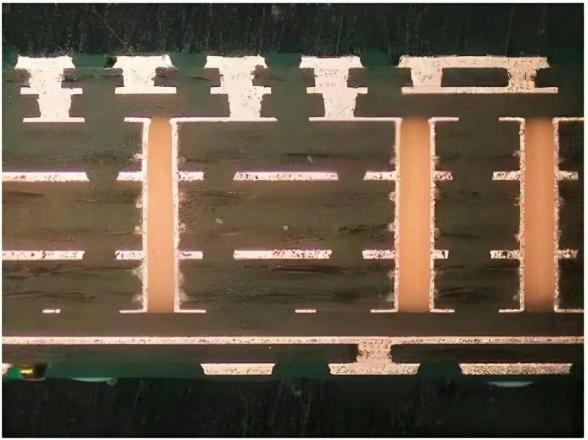
Staggered and stacked microvia concepts; stacked microvias save area but demand better via filling and surface flatness.
3. Third-order HDI: registration becomes the real challenge
Third-order HDI pushes the process window much further. It may involve a three-layer laser reach, such as L1 to L4, or three stacked/sequential microvia build-up cycles.
Laser energy and via geometry
At this level, laser energy, spot size, and depth control become difficult to balance. Too little energy leaves resin or glass residue in the via; too much energy can over-etch the target pad, punch through the copper, or create a flared via profile that is harder to plate reliably.
Layer-to-layer registration
The third laser operation has to hit a landing pad that was formed in an earlier lamination cycle and is now buried inside the board. Material expansion, resin shrinkage, and process-induced distortion can shift that pad. Aligned stacked microvias therefore become much harder than in second-order HDI. Staggered structures reduce the alignment burden, but the routing-space penalty becomes larger as the via count increases.
4. Any-layer HDI: a different manufacturing philosophy
Any-layer HDI is not simply third-order HDI with one more level added. The whole build concept changes. Instead of starting with a core and adding only a few outer build-up layers, the board is manufactured layer by layer, with laser microvias available between essentially every adjacent layer pair.
Sequential build-up process
A typical any-layer process repeats the same cycle many times: laminate a copper layer, laser-drill blind microvias, copper fill and plate the vias, planarize the surface, and then laminate the next layer. This repeated sequential build-up can run through ten, fifteen, or even twenty cycles depending on the product architecture.
Registration system
Each new layer must align with the original drill data and with all previously built layers. CCD registration, scale compensation, and real-time expansion/shrinkage correction are normally required.
Copper filling and planarization
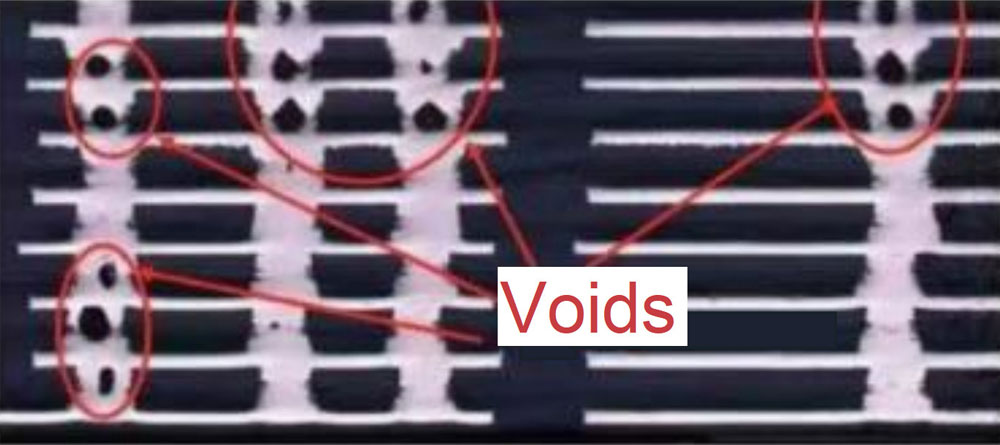
Every microvia must be fully copper filled, with no voids. After plating, the surface has to be planarized to a very low roughness level. If the surface is not flat enough, the next lamination can trap defects or increase delamination risk.
Surface flatness
After repeated plating and planarization cycles, total board thickness variation must still be tightly controlled, often within about +/-5%. At this point, the manufacturing precision approaches what is expected in advanced packaging.
Any-layer HDI enables extremely thin smartphone main boards with very high routing density. It is used in flagship products from companies such as Apple and Huawei. The tradeoff is straightforward: compared with first-order HDI, the cost can be three to five times higher and the manufacturing lead time is much longer.

Contact: Wing
Phone: +852 21386086
E-mail: sales@fwpcb.com
Whatsapp:+86 199 2764 2527
Add: Unit 3, 6/F., Kam Hon Industrial Building,8 Wang Kwun Road, Kowloon Bay, Hong Kong
We chat
